
Pallet Shipping
Pallet shipping is a logistics method where goods are loaded onto standardized wooden or plastic platforms called pallets, secured with strapping or shrink wrap, and transported as a single unit. This approach streamlines the handling process for freight forwarders and carriers, making it ideal for businesses shipping multiple boxes or heavy items. By consolidating your shipment onto a pallet, you benefit from more efficient loading and unloading, reduced risk of damage during transit, and often lower shipping costs compared to sending individual parcels. Pallet shipping is commonly used for LTL (Less Than Truckload) and FTL (Full Truckload) freight services, allowing companies to transport larger quantities of products domestically or internationally. Whether you’re moving inventory between warehouses or fulfilling bulk orders, pallet shipping offers a reliable and cost-effective solution for your freight needs.
What Is Pallet?
Pallets are essential load carriers used in modern logistics to transport nearly all types of goods efficiently and safely. These standardized platforms facilitate the handling and movement of freight using equipment like pallet jacks, forklifts, and warehouse machinery. Consider a practical example: if you need to ship 30 small boxes to the same customer, securing them onto a single pallet transforms your shipment into one consolidated unit. This approach makes handling during transportation significantly easier, as your goods can be moved simultaneously rather than carried individually. Beyond efficiency, pallet shipping provides superior protection for your cargo—ensuring no boxes are lost in transit and minimizing damage risk, particularly important when shipping fragile or valuable items.
Most standard pallets can safely support up to 2,000 kilograms when the weight is properly distributed, making them a stable and practical solution for heavy or bulk shipments. This versatility extends across all transportation modes: whether you’re arranging land freight via truck, international sea freight in shipping containers, or expedited air freight for time-sensitive deliveries, pallets remain the industry standard. By choosing pallet shipping services, businesses benefit from streamlined customs clearance, reduced freight costs, and improved supply chain efficiency for both domestic and cross-border shipments throughout Europe and beyond.
Types of Pallets
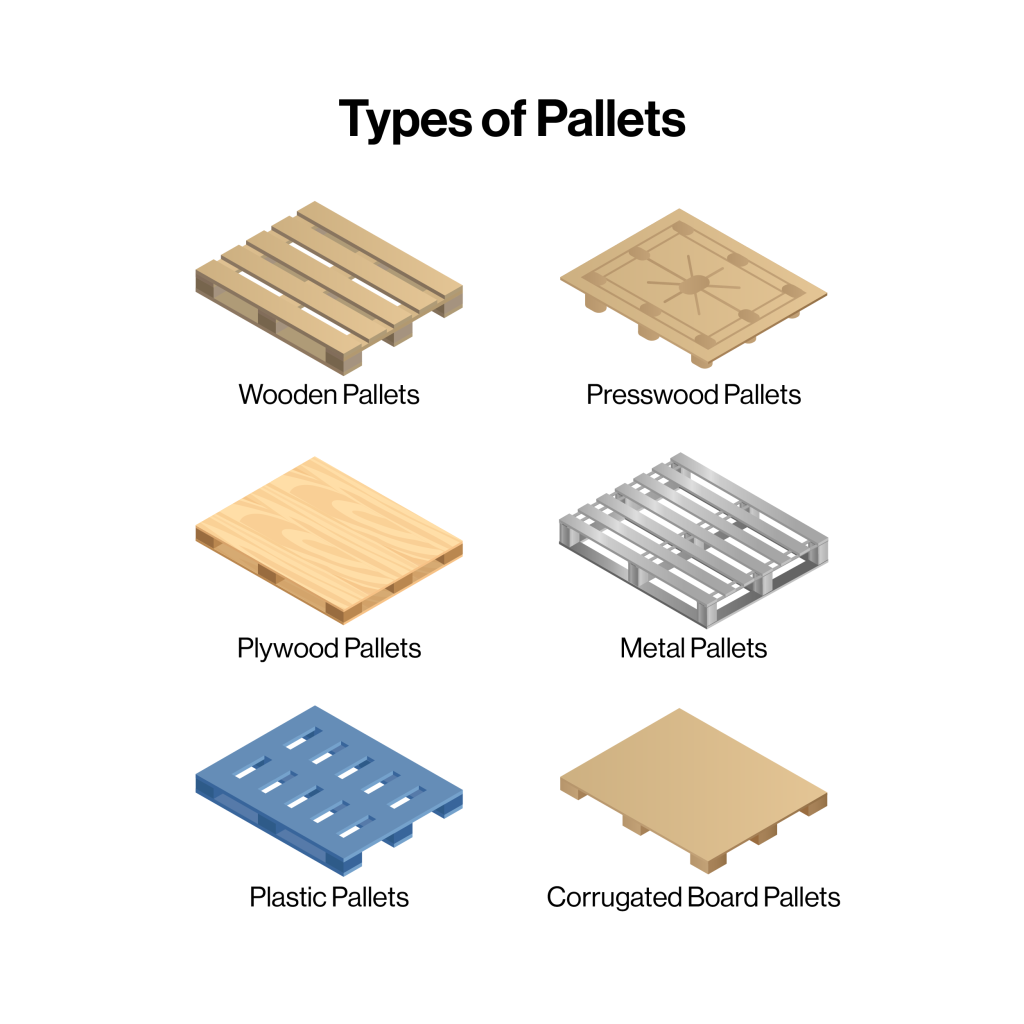
Selecting the right pallet type is essential for safe and cost-effective freight shipping. Here are the six main types of pallets used in logistics and transportation:
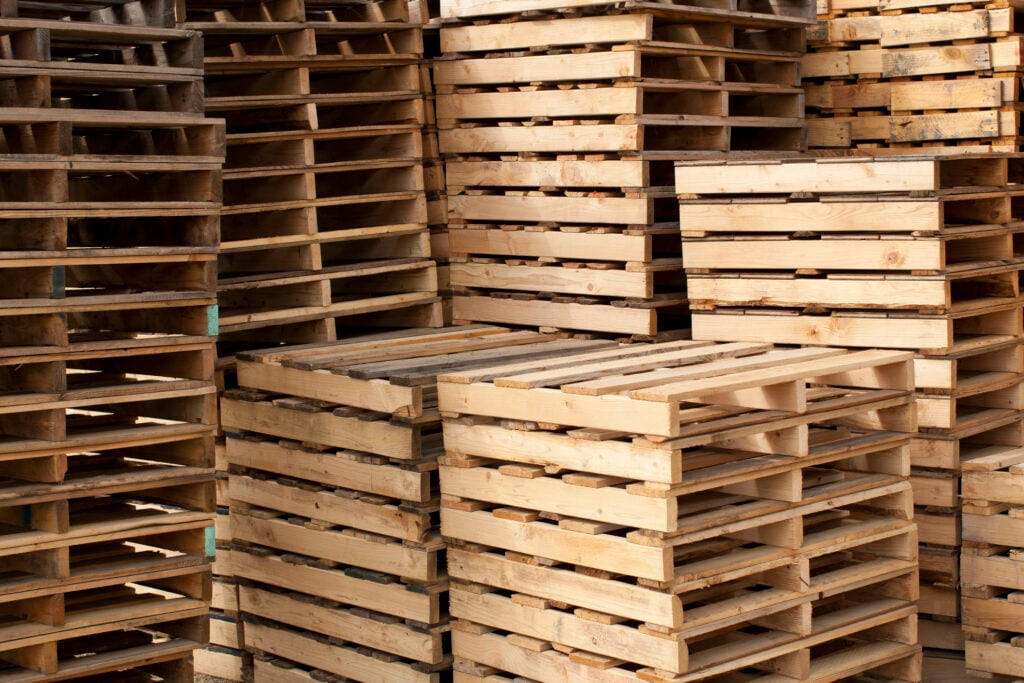
Wooden Pallets – The most common choice in the shipping industry, wooden pallets like the standardized Euro pallet (EPAL) offer excellent durability and high load capacity for heavy goods. They’re ideal for international freight, warehouse storage, and long-distance transport across Europe.
Presswood Pallets – Made from compressed wood fibers, presswood pallets are lightweight yet sturdy, making them perfect for air freight where weight restrictions apply. They’re also cost-effective for one-way shipments and don’t require fumigation for international customs clearance.
Plywood Pallets – Constructed from layers of thin wood veneers, plywood pallets provide a smooth surface and consistent strength. They’re commonly used for export shipping and offer good resistance to moisture, making them suitable for sea freight and container transport.
Metal Pallets – Built from steel or aluminum, metal pallets are extremely durable and can handle the heaviest loads in industrial logistics. They’re reusable, fire-resistant, and ideal for automotive, pharmaceutical, and manufacturing industries requiring long-term warehouse solutions.
Plastic Pallets – Lightweight and resistant to moisture, chemicals, and contamination, plastic pallets are the preferred choice for food, pharmaceutical, and hygiene-sensitive shipments. They’re easy to clean, recyclable, and work well for both domestic and cross-border freight services.
Corrugated Board Pallets – Made from heavy-duty cardboard, corrugated pallets are the lightest and most economical option for single-use shipping. They’re 100% recyclable, reduce shipping costs due to their minimal weight, and are suitable for light to medium cargo in retail and e-commerce logistics.
FAQs
How much does pallet shipping cost?
Pallet shipping rates vary daily based on several key factors in the freight industry. Fuel prices, particularly diesel costs, and transportation labor expenses directly impact your shipping quote. The final price depends on the distance between pickup and delivery locations, the number of pallets in your shipment, and the total weight of your cargo. For international freight involving Switzerland or other non-EU countries, additional costs apply for customs clearance documentation and border processing. Whether you’re arranging domestic land freight within Germany or cross-border pallet transport across Europe, obtaining an accurate quote requires considering your specific route and shipment details. Contact PUREPROGRESS for a personalized pallet shipping quote tailored to your logistics needs.
Where can I buy pallets in Germany/Switzerland?
Germany
While DIY retailers like Obi, Bauhaus, and Toom offer pallets, these are typically priced higher as they’re designed for furniture projects rather than freight shipping. For cost-effective pallet shipping solutions, we recommend specialized logistics suppliers who provide both new and used pallets in various sizes with delivery services:
- Kaiser+Kraft – New plastic and wooden pallets
- Betriebseinrichtung-experte.de – Used and new wooden pallets
- Paletten-profishop.de – Used and new wood and plastic pallets
- Holzprofi24.de – New wooden pallets only
Switzerland
In Switzerland, pallets are available at Landi stores and other DIY retailers. You can purchase directly in-store or order online through www.landi.ch for home delivery:
- Schnaeppchen.ch – New wooden pallets with online ordering
- Tutti.ch – Used pallets, local collection available
For professional freight forwarding and pallet shipping services across Europe, choose suppliers that specialize in logistics-grade pallets to ensure proper load capacity, customs compliance, and safe transport of your goods.
Is there any insurance for pallet shipping?
All freight transported by PUREPROGRESS is insured according to Spedlogswiss liability guidelines at approximately EUR 9-10 per kilogram, with coverage up to CHF 1,000,000 through Allianz Suisse.
Example: A 600 kg pallet valued at EUR 5,000 is fully covered automatically. However, a 150 kg pallet worth EUR 10,000 would only be insured for EUR 1,500 (150 kg x EUR 10). For high-value shipments exceeding weight-based coverage, we can arrange additional transport insurance at competitive rates.
Proper packaging is essential for valid insurance claims. Please indicate in your quote request if you require supplementary freight insurance for your pallet shipping needs.
How long does pallet shipping takes?
Transportation time for pallet shipping depends on shipment volume, distance, and your specific logistics requirements.
Domestic Shipping: Within Germany or Switzerland, single pallet deliveries typically take 1-3 business days via land freight.
European Shipping: Cross-border pallet transport within the EU generally requires 1-2 weeks, depending on customs clearance procedures. If customs authorities schedule inspections at the border or origin, additional processing time may apply.
Worldwide Shipping: International freight delivery times vary by mode—air freight shipments typically arrive within one week, while sea freight can take up to 8 weeks depending on the destination port and customs processing.
PUREPROGRESS offers flexible scheduling, including specific pickup and delivery date coordination to meet your freight forwarding needs. Contact us for accurate transit time estimates tailored to your shipment route and requirements.

Need help understanding more about air freight? Or do you need help with our air freight service? We handle all the necessary documentation, special care, and regulatory requirements to ensure a smooth journey.

Looking for reliable sea freight services? Our sea freight inquiry provides flexible and cost-effective solutions for shipping your goods globally. Whether it’s full container loads (FCL) or less-than-container loads (LCL), we ensure safe, timely, and efficient transport tailored to your needs. Get in touch for a customized sea freight solution that suits your business.

Ensure smooth and compliant entry into Switzerland with our specialized customs clearance services. We handle all documentation, tax calculations, and regulatory requirements to guarantee your goods move effortlessly through Swiss customs, saving you time and avoiding unnecessary costs.

Looking to transport your car safely and efficiently? Our car transport inquiry service provides tailored solutions for your vehicle’s journey, whether domestic or international. Get in touch today for a personalized quote and seamless service.

PUREPROGRESS offers secure and reliable motorcycle transport services, ensuring your bike is handled with care and delivered safely to its destination. Whether it’s a local move or international shipping, our team provides tailored solutions and professional support every step of the way.